
Air core vs RC drilling is one of the first decisions in any mineral exploration program, and the right answer depends on your target depth, ground conditions and the data quality your project objectives demand.
Choosing the wrong drilling method can compromise sample quality, extend project timelines and inflate costs. This guide explains how each method works, where each performs best, and how to make informed decisions when planning subsurface exploration.
How Does Air Core Drilling Work?
Air core drilling is a rotary drilling method designed for rapid penetration of unconsolidated ground and weathered ground. It’s the go-to solution for shallow exploration across much of Western Australia, where deep weathering profiles cover prospective bedrock.
The method uses a double-tube drill string made up of an outer tube and an inner tube. A drill bit at the end of the string cuts the formation while compressed air does the work of bringing sample material to the surface.
- Cutting: A blade bit, commonly fitted with tungsten carbide cutting edges, rotates and cuts through unconsolidated or weathered ground.
- Air delivery: Compressed air travels down the gap between the outer tube and the inner tube to the bit face.
- Sample return: Cuttings are blown into the inner tube and carried back up to the surface, where they are collected through a cyclone.
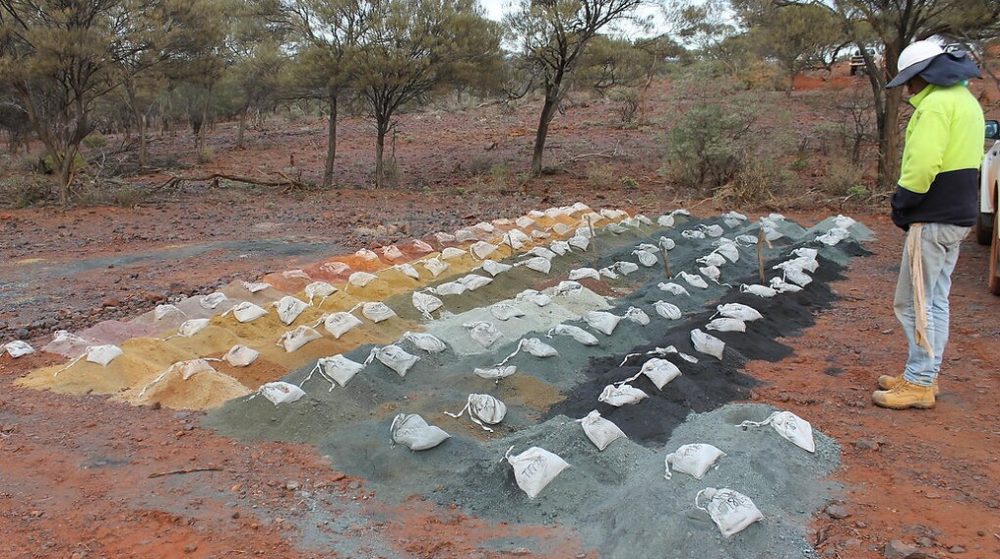
- Logging: Samples are laid out or bagged at set intervals so the geologist can log the sample material and record the subsurface conditions.
Because the sample travels inside the inner tube rather than up the outside of the hole, air core drilling limits cross-contamination from the hole wall.
Where air core drilling performs best
- Shallow investigations in regolith, clay, sand and saprolite
- Geochemical sampling along regional traverses and grid patterns
- Testing towards the weathered bedrock interface (hard layers above fresh rock sometimes cause blade refusal).
- Programs that need lightweight rigs, low cost per metre and minimal site disturbance
Conventional blade-based air core drilling is generally unsuitable for competent hard rock. Once the tungsten blades meet harder ground, penetration can slow sharply, and the program should move to a hammer-based or core drilling method.

How Does Reverse Circulation Drilling Work?
RC drilling is the preferred choice for exploration programs that need accurate samples from hard rock and greater depths. It combines rotary drilling with a pneumatic hammer to penetrate competent rock that would stop conventional air core blade drilling.
RC drilling uses dual-wall rods and a face-sampling hammer bit. Compressed air drives the hammer and flows down the annulus between the outer and inner tube of the drill string. The air then returns up the inner tube, carrying the cuttings to the surface through a cyclone and splitter, where the sample is collected in metre intervals.
Strengths of RC drilling
- Sample quality: RC provides rock-chip samples for assay, resource estimation and grade control, subject to appropriate recovery, splitting and quality-control procedures.
- Speed and cost effectiveness: RC is generally faster and cheaper per metre than diamond drilling, although performance depends on ground conditions and project requirements.
- Dust management: Dust extraction or suppression systems and controls at the cyclone and sample splitter help manage airborne dust. Controls should suit the operating conditions and site requirements.
RC does not provide intact core samples, so it will not show structure, texture or orientation in the way that core drilling does. Where that detail matters, RC pre-collars are often combined with diamond tails.
Air Core vs RC Drilling
Air core vs RC drilling comes down to depth, ground conditions and sampling requirements. Air core is generally quicker and cheaper in suitable soft or weathered ground. RC is better suited to deeper targets and competent hard rock. Sample quality depends on recovery and sampling procedures with either method.
| Factor | Air Core Drilling | RC Drilling |
| Typical use | Shallow exploration, regional geochemistry | Resource definition, deep mineral exploration, grade control |
| Ground conditions | Weathered ground, unconsolidated formations | Weathered ground through to hard rock |
| Drilling depths | Shallow, generally to blade refusal | Significant depths, hundreds of metres |
| Cutting tool | Tungsten bit with tungsten blades | Face-sampling hammer with tungsten carbide button bit |
| Sample type | Cuttings through the inner tube | Dry, uncontaminated cuttings through the inner tube |
| Sample quality | Good in soft ground; can suffer in wet or hard ground | High, with strong sample recovery |
| Penetration | Rapid penetration in soft formations | Efficient in hard rock; slower speed than air core in clay |
| Cost | Low cost per metre | Higher than air core, lower than diamond drilling |
| Rig size | Lightweight rigs, small footprint | Larger rigs and compressor support |
In practice, many programs use both. Air core defines the regolith and tests the bedrock interface, then RC follows up the best results at depth.
Ground Conditions and Choosing the Right Drilling Method
Ground conditions are the most reliable guide to the right drilling method. Start with what is above and around the target, then work back to the method.
- Weathered ground and unconsolidated ground: Air core drilling gives rapid penetration and a representative sample at low cost. This is where AC drilling is most productive.
- Transition zone and saprock: The choice depends on competency. As air core blades encounter resistant ground, a suitably equipped rig might switch to hammer-based drilling, or the programme might require a separate RC or diamond rig.
- Hard rock: RC drilling or diamond drilling. Tungsten blades won’t cut hard rock as efficiently, so air core is not the appropriate drilling method.
- Wet or water-bearing ground: RC with appropriate air and water management helps protect sample quality; poor ground can also affect sample recovery in air core.
- Deep targets: RC, often with a diamond tail, to reach greater depths and retain geological information.
Beyond ground conditions, consider four questions before you commit.
- What depth do you need to reach?
- What do the samples need to support: geochemistry, resource estimation, grade control or geotechnical design?
- How much sample quality and data quality does the stage of the project require?
- What are your project timelines and budget?
Answering these early prevents over-specifying a program, and it prevents the opposite problem of collecting samples that cannot support the decision you need to make.
Choosing the Right Drilling Method for Your Next Project
The right drilling method is the one that gives you the samples and data your project objectives require, at a cost and timeline you can support.
Precision Drilling Australia delivers air core and RC drilling with experienced crews, state-of-the-art equipment and a commitment to safety and quality.
Get in touch to discuss your next drilling project, and we will help you select the method that suits your specific project requirements.
Air Core vs RC Drilling FAQs
Air core has the lower cost per metre and is the more cost-effective option for shallow exploration in weathered ground. RC drilling is more cost-effective once depth, hard rock or sample quality requirements rule air core out.
Conventional air core blade bits are designed primarily for unconsolidated and weathered ground. Penetration slows in competent hard rock, where RC hammer drilling or diamond drilling is generally more appropriate.
Yes. Many programs use air core to define the regolith, RC to test targets at depth, and diamond drilling to confirm structure. Contact our team to discuss the right sequence for your project.


